



When a vessel arrives at a major commercial port, several activities must be completed before the ship can begin its operations and eventually depart. Colombo Port is an important maritime hub in Sri Lanka, and vessels calling at the port may require ship agency, documentation, crew support, supplies, technical assistance and other marine services.
A ship agent coordinates with the vessel, port authorities, suppliers and other service providers to help manage the requirements of the vessel during its port call.
1. Pre-Arrival Planning
The process begins before the vessel reaches Colombo Port.
The vessel or its appointed representative provides the required arrival information and documents to the relevant parties. The ship agent coordinates the necessary arrangements for the vessel’s arrival.
Pre-arrival activities may include:
- Vessel arrival information
- Port documentation
- Crew details
- Cargo-related information
- Required services and supplies
- Berthing arrangements
- Pilot and tug requirements
- Customs and immigration coordination
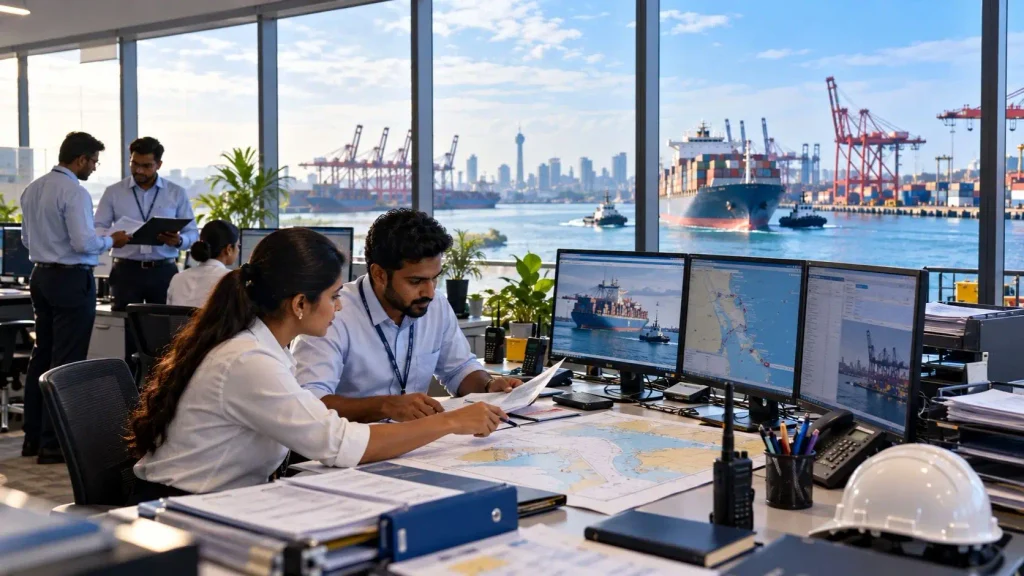
Early preparation helps ensure that the necessary arrangements are in place before the vessel reaches the port.
2. Port Clearance and Documentation
One of the important responsibilities of a ship agency service in Colombo is coordinating the documentation required for the vessel’s arrival and departure.
The ship agent works with relevant authorities and organizations to facilitate the required formalities.
Depending on the vessel and port call, this may involve coordination relating to:
- Port authorities
- Customs
- Immigration
- Health authorities
- Maritime and regulatory requirements
- Vessel documentation
Accurate documentation is an important part of managing a vessel’s port call efficiently.
3. Vessel Arrival at Colombo Port
Once the vessel approaches Colombo, the ship agent coordinates with the relevant parties involved in the vessel’s arrival.
The arrival process can involve:
- Pilot arrangements
- Tug arrangements where required
- Port coordination
- Berthing arrangements
- Communication with the vessel’s master and crew
The objective is to coordinate the vessel’s arrival and ensure that the required port-side arrangements are ready.
4. Berthing and Port Operations
After the vessel arrives at the port, it is positioned at its designated berth according to the port’s operational arrangements.
During the vessel’s stay, the ship agent may coordinate with different parties depending on the vessel’s requirements.
These activities can include:
- Cargo operation coordination
- Crew requirements
- Technical services
- Ship supply arrangements
- Spare-part delivery
- Fresh water supply
- Waste disposal
- Other vessel services
This is where several different marine support services in Sri Lanka may come together during a single port call.
5. Crew Support and Services
Crew requirements are another important part of vessel operations.
Depending on the vessel’s needs, a ship agent may assist with:
- Crew changes
- Airport transfers
- Transportation
- Accommodation arrangements
- Medical assistance
- Immigration-related coordination
- Other crew requirements
Coordinating these services allows the vessel’s crew to complete necessary activities while the vessel is in port.
6. Ship Provision Supply
During a port call, vessels may require additional food and consumable supplies.
Ship provision supply in Sri Lanka can include:
- Fresh fruits and vegetables
- Meat and seafood
- Dry provisions
- Beverages
- Bottled water
- Other food and consumable items
The required supplies can be prepared and delivered according to the vessel’s order and operational requirements.
7. Ship Stores Supply
Vessels may also require non-food supplies for maintenance, operations and crew use.
These can include:
- Engine stores
- Electrical stores
- Deck stores
- Safety stores
- Cabin stores
- Stationery
- Bonded stores
- PPE
- Hardening materials
Coordinating these requirements as part of the port call helps vessels obtain essential supplies before continuing their voyage.
8. Ship Spares and Technical Requirements
A vessel may require spare parts or technical support while in Colombo.
For urgent requirements, the ship agent or marine service provider can coordinate the sourcing, clearance, transportation and delivery of required items.
Examples include:
- Engine components
- Mechanical parts
- Electrical components
- Technical equipment
- Maintenance materials
Fast coordination can be particularly important when a vessel requires a specific spare part before departure.
9. Fresh Water and Other Marine Services
Depending on the vessel’s requirements, additional services can also be arranged during the port call.
These may include:
- Fresh water supply
- Marine lubricants
- Underwater services
- Tank cleaning
- Garbage disposal
- Ship safety equipment
- LSA & FFA servicing
- Charts and publications
- Dock-side repairs
Providing access to multiple services allows different vessel requirements to be coordinated during the same port visit.
10. Financial and Disbursement Arrangements
A vessel’s port call involves various expenses and payments.
The ship agent may coordinate payments and financial documentation associated with services arranged for the vessel.
These can include expenses related to:
- Port services
- Pilotage
- Tug services
- Supplies
- Transportation
- Technical services
- Other local service providers
Proper documentation and record keeping are important for preparing the vessel’s port-related accounts.
11. Departure Preparation
Once cargo operations, crew requirements, technical work and other necessary activities are completed, preparations begin for the vessel’s departure.
The ship agent coordinates the outstanding requirements and departure formalities with the relevant parties.
This can include:
- Departure documentation
- Port clearance
- Final crew information
- Outstanding service coordination
- Final supply arrangements
- Pilot and tug arrangements where required
12. Vessel Departure from Colombo Port
After the necessary departure formalities and operational requirements have been completed, the vessel leaves the port according to the arranged schedule.
The ship agent continues coordinating with the vessel and relevant parties until the port call has been completed.
The process can therefore be summarized as:
Pre-Arrival Planning → Documentation → Vessel Arrival → Berthing → Port Operations → Crew & Supply Services → Technical Support → Departure Clearance → Vessel Departure
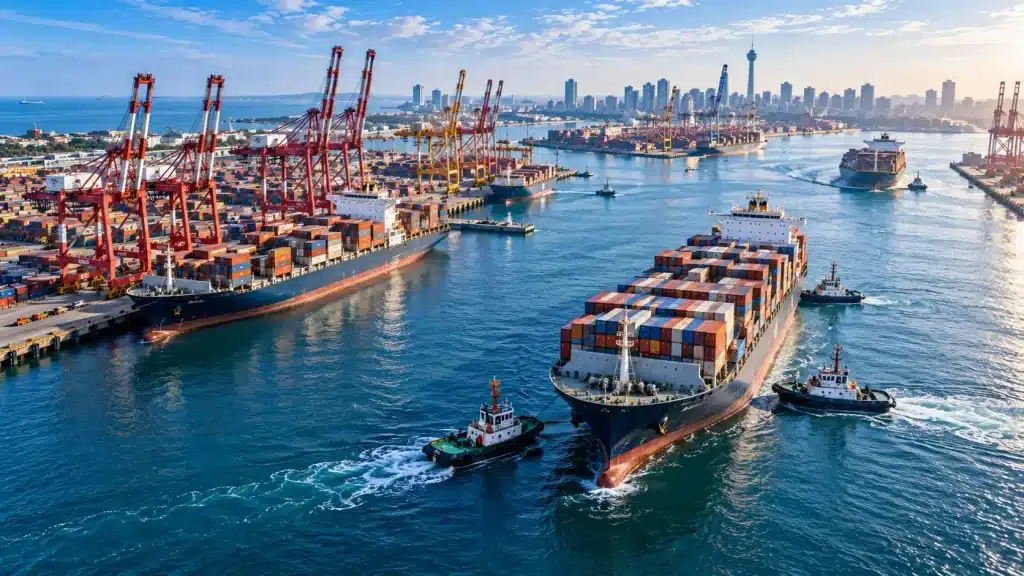
The Role of a Ship Agent During a Colombo Port Call
A ship agent acts as a local point of coordination between the vessel and the different organizations involved in its port call.
Instead of the vessel’s operator having to coordinate separately with numerous local suppliers and service providers, the ship agent can assist in bringing these requirements together.
This can include coordination for port clearance, crew services, ship provisions, ship stores, ship spares, marine lubricants, fresh water, underwater services, repairs and other vessel requirements.
Supporting Vessels at Colombo Port
Every vessel has different requirements depending on its type, cargo, crew, voyage schedule and operational condition. For this reason, port-call services need to be coordinated according to the specific requirements of each vessel.
HS Lanka provides ship agency and marine support services in Sri Lanka, including vessel agency assistance, provision supply, ship stores, ship spares, underwater services, marine lubricants and other vessel-related services.
The company’s service offering can therefore support multiple requirements throughout a vessel’s stay in Sri Lanka.
Conclusion
A ship’s arrival at Colombo Port involves much more than simply entering and leaving the harbor. From pre-arrival planning and port clearance to crew support, vessel supplies, technical services and departure formalities, many activities need to be coordinated during a port call.
Effective ship agency services in Colombo help connect vessels with the local authorities, suppliers and service providers required to complete these activities efficiently.
For vessel owners, operators and ship managers, having coordinated access to marine services in Sri Lanka can simplify the management of their vessel’s port call and its operational requirements.