(We are “on call”24 hours a day)



The Role of Sri Lanka in International Maritime Trade
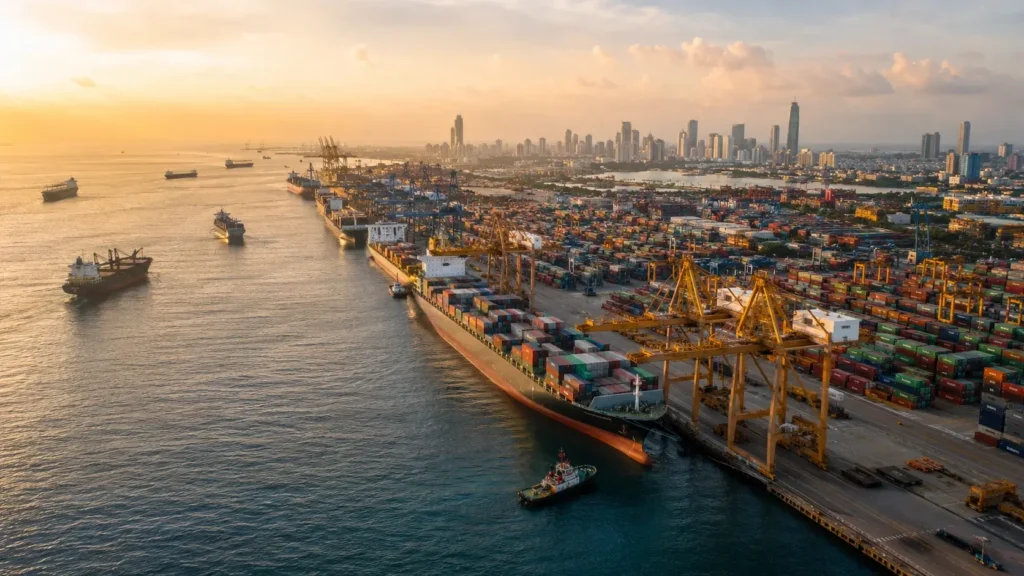
Sri Lanka has long been recognized as one of the most strategically positioned maritime nations in the world. Located at the heart of the Indian Ocean, the island sits just a few nautical miles from one of the busiest east-west shipping lanes, making it a vital hub for global maritime trade. Every year, thousands of commercial vessels pass close to Sri Lanka while transporting goods between Asia, Europe, the Middle East, and Africa.
This unique geographical advantage has enabled Sri Lanka to develop into a key player in international shipping, offering world-class port facilities, efficient maritime services, and strong connectivity to regional and global markets. As international trade continues to expand, Sri Lanka’s role in supporting global supply chains is becoming increasingly significant.
Sri Lanka's Strategic Geographic Advantage
Sri Lanka’s location places it at the crossroads of major international shipping routes that connect manufacturing hubs in Asia with consumer markets across Europe, the Middle East, and Africa. This strategic position allows vessels to access port facilities without making significant deviations from their primary routes, helping shipping companies save both time and operational costs.
Its central location also makes Sri Lanka an ideal destination for transshipment, vessel servicing, crew changes, ship provisioning, and emergency marine logistics. These services allow ships to continue their voyages efficiently while minimizing delays and operational disruptions.
The Importance of the Port of Colombo
The Port of Colombo serves as Sri Lanka’s primary gateway for international maritime trade and is recognized as one of South Asia’s leading container ports. Equipped with modern container terminals, deep-water berths, and advanced cargo handling systems, the port efficiently accommodates some of the world’s largest container vessels.
A significant share of the cargo handled at the Port of Colombo consists of transshipment containers, highlighting its role as a regional logistics hub. The port’s extensive shipping connections enable efficient movement of goods between Sri Lanka and major global markets, supporting both import and export activities.
Continuous investments in infrastructure, digital technologies, and terminal capacity have strengthened the port’s ability to handle growing cargo volumes while maintaining competitive turnaround times.
Supporting Global Supply Chains
Modern supply chains rely on dependable maritime transport to move raw materials, manufactured products, and essential commodities across international markets. Sri Lanka contributes to this global network by providing efficient port operations and a wide range of maritime support services.
These services include:
- Ship agency and husbandry services
- Crew change coordination
- Marine logistics and transportation
- Ship chandling and vessel provisioning
- Marine spare parts logistics
- Bunker coordination
- Fresh water supply
- Underwater vessel maintenance
- Tank cleaning and maintenance
Together, these services help reduce vessel downtime and ensure that ships remain on schedule while operating safely and efficiently.
Sri Lanka as a Regional Transshipment Hub
One of Sri Lanka’s greatest strengths is its role in container transshipment. Rather than serving only domestic trade, Sri Lankan ports facilitate the transfer of cargo between international shipping services, allowing containers to reach destinations across South Asia and beyond.
This capability benefits shipping companies by improving route flexibility, reducing transportation costs, and enhancing connectivity between global markets. Efficient transshipment operations also contribute to faster cargo movement, making Sri Lanka an attractive partner for international logistics providers.
Maritime Services Beyond Cargo Handling
International shipping requires far more than loading and unloading cargo. Every vessel visiting a port depends on a network of professional maritime service providers to ensure smooth operations during its stay.
Marine service companies in Sri Lanka support vessels through a variety of essential services, including:
- Port documentation and regulatory coordination
- Customs and immigration assistance
- Crew welfare arrangements
- Procurement of provisions and technical supplies
- Delivery of critical spare parts
- Waste disposal coordination
- Lubricant supply
- Emergency operational support
By providing these services efficiently, local maritime specialists help vessels maintain operational readiness while complying with international regulations.
Sustainability in Sri Lanka's Maritime Sector
As environmental regulations continue to evolve, Sri Lanka’s maritime industry is embracing more sustainable practices. Ports and marine service providers are adopting initiatives that improve operational efficiency while reducing environmental impact.
These efforts include:
- Promoting cleaner vessel operations
- Supporting environmentally responsible waste management
- Improving energy-efficient port infrastructure
- Facilitating compliance with international environmental standards
- Encouraging digital documentation to reduce paper consumption
These initiatives contribute to a cleaner maritime industry while helping shipping companies meet global sustainability objectives.
Future Opportunities for Sri Lanka
The future of Sri Lanka’s maritime sector is closely linked to continued investment in infrastructure, technology, and service excellence. Opportunities for growth include:
- Expansion of port capacity
- Increased digitalization of port operations
- Development of smart logistics solutions
- Growth in marine engineering services
- Enhanced offshore support capabilities
- Adoption of green shipping technologies
- Stronger regional trade partnerships
By continuing to modernize its maritime infrastructure and services, Sri Lanka can further strengthen its position as a preferred destination for international shipping companies.
Why Reliable Maritime Partners Matter
Efficient maritime operations depend on experienced service providers who understand the complexities of international shipping. From coordinating port calls and managing vessel documentation to arranging emergency logistics and technical support, reliable partners help minimize delays and ensure seamless operations.
Working with an experienced maritime service provider allows ship owners, operators, and managers to focus on their core operations while benefiting from local expertise, strong supplier networks, and efficient coordination throughout every stage of a vessel’s port call.
Conclusion
Sri Lanka’s strategic location, modern port infrastructure, and comprehensive maritime services have established the country as a vital link in international maritime trade. As global shipping continues to evolve, the nation remains well-positioned to support growing trade volumes, enhance regional connectivity, and deliver high-quality maritime solutions.
For shipping companies seeking efficient port operations, dependable logistics, and professional marine support, Sri Lanka offers the expertise and infrastructure needed to keep global trade moving smoothly.
Recent Posts
-
 A Beginner's Guide to Maritime Terminology: Essential Shipping Terms Explained
 -
The Role of Sri Lanka in International Maritime Trade
-
 How Green Practices Are Changing Global Maritime Operations
 -
 Ship Departure Requirements: 5 Things Every Ship Needs Before Leaving Port
 -
 Ship Fresh Water Shortage: What Happens When a Vessel Runs Out of Water at Sea?